
The facts:
September 27, Helene made landfall in Florida as a category 4 Hurricane with winds of 140 mph.
Emergency declarations in 5 states: Florida, Georgia, Virginia, North Carolina, South Carolina, and Kentucky
Over 227 people dead across 6 states
National Weather service statistics – Helene dumped “staggering” amounts of rain including:
31.33 inches in the tiny town of Busick, NC.
12 -14 inches in South Carolina
12 – 16 inches in Florida
12 – 14 inches in Georgia
Notice that in NC the rainfall in areas was over 2 feet – 2 FEET!
500 MILE WIDE STORM: count the states!
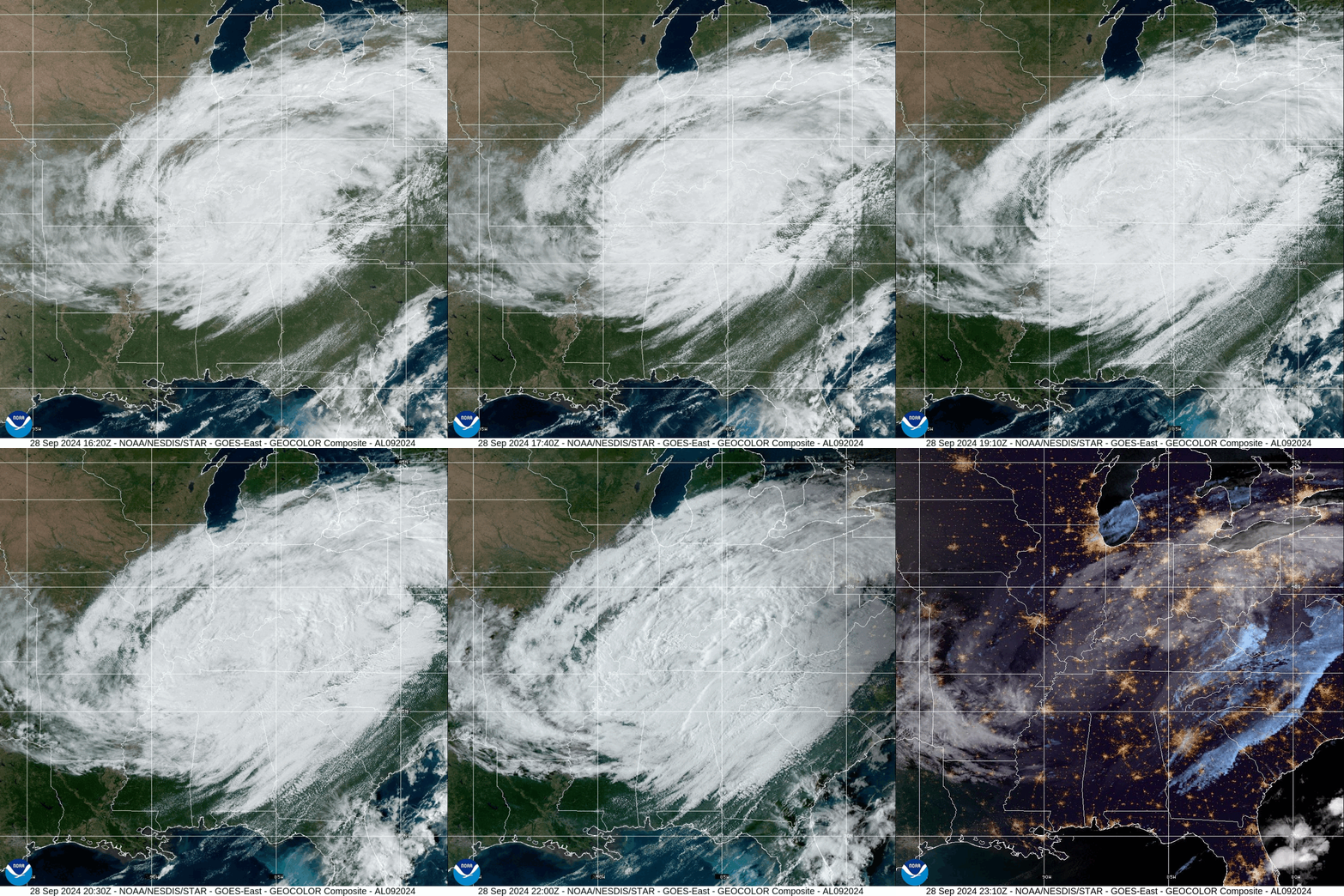
https://www.star.nesdis.noaa.gov/GOES/floater.php? storm id=AL092024#homePageLink
Devastation is not just a word:
Remember when people would take shelter in hospitals and schools?
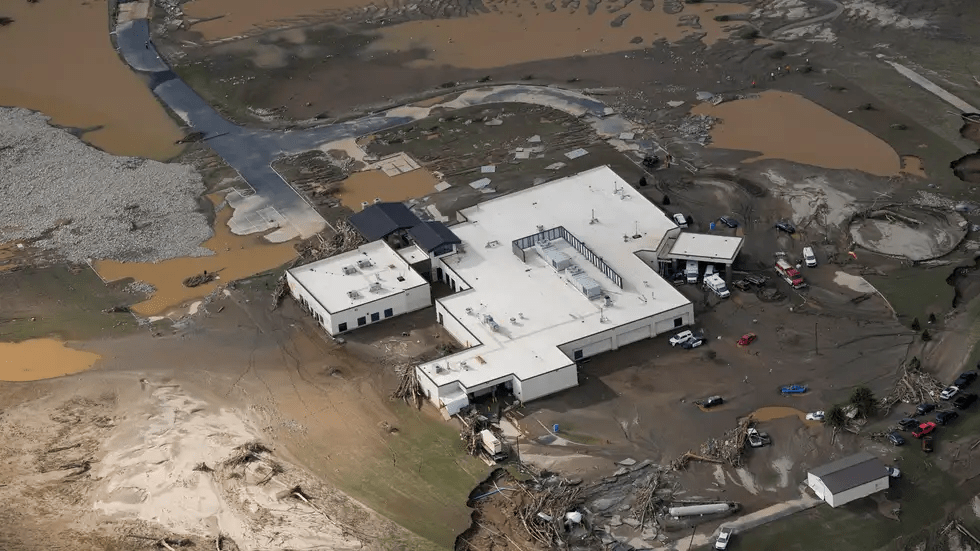
An aerial view shows flood-damaged Unicoi County Hospital in the aftermath of Hurricane Helene, Saturday, Sept. 28, 2024, in Erwin, Tenn. (AP Photo/George Walker IV)

Damaged structures are seen in downtown Chimney Rock, North Carolina, on Wednesday, Oct. 2, 2024, after the passage of Hurricane Helene. (Photo by ALLISON JOYCE/AFP via Getty Images)
When a disaster like this happens, I look for the helpers:
How did this disaster happen? Another ‘once in a century’ storm? Parts of the Gulf of Mexico are 5 degrees above normal:
‘Some parts of the gulf are running hotter than that. Offshore of Tampa Bay and the Louisiana coast, for instance, sea surface temperatures are more than 5 degrees hotter than normal. (Inside Tampa Bay itself, water south of the Gandy Bridge topped out over 100 degrees on July 26.) A steamy gulf is not only taking a toll on marine life, it also means there’s more fuel available for hurricanes as the storm season enters high gear. ‘ https://news.wgcu.org/section/environment/2023-08-21/the-gulf-of-mexico-is-record-hot-heres-what-that-means-for-hurricanes-and-wildlife
The bigger picture:
List of ‘Category 5’ hurricanes with landfall in the US since 2000: 18 Cat 5 storms in 24 years
- Isabel – 2003
- Ivan – 2004
- Emily – 2005
- Katrina – 2005
- Rita – 2005
- Wilma – 2005
- Dean – 2007
- Felix – 2007
- Matthew – 2016
- Irma – 2017
- Maria – 2017
- Michael – 2018
- Dorian – 2019
- Lorenzo – 2019
- Ian – 2022
- Lee – 2023
- Beryl – 2024
- Milton – 2024 – set to make landfall in Florida NOW
From 1924 – 2000, there were only 25 Category 5 hurricanes (that’s in 76 years!)
What is a Category Five Hurricane?
‘Winds 157 mph or higher (252 km/hr or higher). Catastrophic damage will occur: A high percentage of framed homes will be destroyed, with total roof failure and wall collapse. Fallen trees and power poles will isolate residential areas. Power outages will last for weeks to possibly months. Most of the area will be uninhabitable for weeks or months. The Keys Hurricane of 1935 and Andrew of 1992 made landfall in South Florida as Category Five hurricanes.’ https://www.weather.gov/mfl/saffirsimpson
Want to do something? There is a huge opportunity to make sure the current efforts to avoid the worst case scenario continue.
You might want to check out a candidate’s record on Climate Change, and:

Next post – back to the North Atlantic Current, and 3 possible scenarios.
Want to learn more?
https://www.cbsnews.com/news/atlantic-hurricane-basin-category-5-united-states/?intcid=CNR-02-0623
 Climate Change Simply Explained
Leave a comment